
UNITEE / Inside our design process
Why Better Gym Shirt Designs Start With More Ideas
A great design isn't always the first idea. Sometimes it's the fifteenth. Here's why we believe creative volume, experimentation, and a little mathematics are the keys to making better gym apparel.
Ask ten people to judge a T-shirt design and you might get ten different opinions. That's the problem with creative work. Everybody has taste, but taste isn't necessarily evidence.
We've learned that the best way to make those decisions less subjective isn't to hold longer meetings, ask more people for opinions, or keep revising the same logo.
It's to generate more genuinely different ideas in the first place.
Some will be terrible. Some will be decent. A few might be exceptional. And even the ideas we reject teach us something about what to try next.
That's why UNITEE invests so much time creating apparel concepts before a customer has even asked for them. We're not simply stockpiling artwork. We're building experience through repetition, experimentation, and selection.
One idea gives you an opinion. Multiple ideas give you something to compare. Repeated projects give you experience you can actually use.
Volume Is What Eventually Drives Quality.
Not because everything we make will be good. Because creating more thoughtful possibilities gives us more chances to discover what good actually looks like.
01 / The expensive way we learned
Years of Boardroom Debates Taught Us Something
Our founder spent years sitting in boardrooms watching people go back and forth over logos and design decisions.
Somebody wanted blue. Somebody else liked red. Another person thought the type should be bigger. Someone in a position of authority had a favorite, so naturally that opinion carried more weight.
Hours could disappear debating something that nobody in the room really had evidence to support.
And the worst part? We were usually evaluating only one or two ideas, as though one of them had to be the answer.
That's a terribly inefficient way to solve a creative problem.
It took time to recognize that instead of spending all our effort defending, refining, and debating a small number of possibilities, we could invest more energy exploring different directions first.
More attempts create more comparisons. More comparisons help expose weak assumptions. And over time, the results help us make better decisions before we ever enter the next meeting.
02 / This isn't unique to design
Baseball Players and Movie Studios Already Understand This
The baseball analogy
3 / 10Three Hits Can Make You a Star
A baseball player who consistently hits .300 is doing exceptionally well. That means getting a hit roughly three times in every ten at-bats.
Seven unsuccessful at-bats aren't proof that the player is terrible. They're part of a process in which success is measured over many opportunities.
Imagine judging that same player from a single at-bat. You'd know almost nothing about their ability.
The movie studio analogy
1–2A Few Hits Can Carry the Slate
Movie studios develop and release a slate of films knowing they won't all become blockbusters. A small number of breakout successes may generate an outsized share of the returns.
The strategy isn't to guarantee that every film becomes a hit. It's to develop a pipeline, learn from the audience, and improve the odds of finding the winners.
Creative apparel follows a similar principle. We don't expect every experiment to become a best seller.
These are illustrations of the value of repeated attempts, not claimed hit-rate statistics for UNITEE's designs or the movie industry.
03 / The mathematical approach
More Attempts. Better Selection. Less Guesswork.
The advantage of volume isn't simply having more finished designs. It's being able to reject weak ideas early and put more attention into the promising ones.
Explore
Imagine a dozen rough concepts, references, compositions, and garment directions explored internally.
Shortlist
Choose a few genuinely different directions worth comparing, instead of presenting every sketch.
Develop
Refine the best choice into artwork that works with the garment, printing method, and audience.
Learn
Use actual customer feedback and member buying behavior to improve the next release.
Illustrative workflow, not a fixed number of UNITEE design submissions or a guaranteed success formula.
When you begin with a single direction, there's nothing meaningful to compare it against. You can spend days refining something that wasn't a particularly strong idea in the first place.
When you explore several directions, weaknesses become easier to spot. You also discover approaches you wouldn't have thought of if you'd committed to the first acceptable idea.
The goal is high creative volume behind the scenes and a smaller, better selection in front of the customer.
04 / Turning opinions into useful information
More Ideas Help Us Reduce Subjectivity
A design can be beautifully executed and still be wrong for the gym. We need to judge more than whether somebody in the room likes it.
| The subjective question | A better question | What we learn |
|---|---|---|
| "Which logo looks coolest?" | Which direction reflects this gym's personality and appeals to its actual members? | Whether the artwork fits the audience rather than just the decision-maker. |
| "I think everybody likes black shirts." | Which garment colors sold best in previous releases? | Real preferences instead of guesses. |
| "Let's put the design on everything." | Which garment and placement make the concept feel like a complete product? | Better wearability, clearer direction, and less unnecessary expense. |
| "Everyone said they loved the design." | Did members actually order it and wear it? | The difference between a compliment and a buying decision. |
| "We should repeat last year's idea." | Which elements worked, and which ones should we challenge? | How to build on success without getting repetitive. |
None of this eliminates taste. Creative work will always involve judgment. But a larger body of work, paired with real feedback, makes our judgment more informed.
There's a big difference between asking members which shirt they like and seeing which shirt they're willing to spend money on.
05 / Why we show you different options
We'd Rather Give You a Few Strong Choices Than One Expensive Guess
When practical, we generally try to give our customers a couple of different creative directions at the beginning of a project.
Not thirty versions of the same logo with slightly different lettering. Real alternatives.
Maybe one direction leans vintage and nostalgic. Another is clean and modern. A third takes a bigger creative risk with an illustrated character or unexpected visual theme.
Each one is essentially a different hypothesis about what could work for your gym.
The gym owner brings knowledge of their members. We bring experience from designing and producing apparel for gyms across the country. Comparing those directions lets us combine both.
But more exploration doesn't mean more products to manufacture. We usually encourage gyms to focus on one or two strong designs per run. Splitting a small order across too many separate designs can damage the economics.
Our ideal outcome is simple: explore broadly, choose deliberately, and produce a focused collection.
06 / The distinction that matters
Volume Doesn't Mean Producing More AI Slop
There's an important difference between generating a hundred images and exploring a hundred ideas.
If all we're doing is asking AI for increasingly aggressive lions lifting barbells, we're not creating much meaningful variety. We're producing variations of the same predictable visual formula.
Real idea volume means exploring different creative territories: typography, cultural references, history, illustration styles, garment combinations, color systems, and printing techniques.
Some ideas should challenge our assumptions. Some should be rejected immediately. Others might be saved for a completely different project two years down the road.
The real skill is knowing which directions are worth pursuing and why.
AI can accelerate exploration, but it doesn't replace the ability to identify what is original, appropriate, wearable, and commercially promising.
07 / Our investment, before your order
This Is Why We Built the UNITEE Design Lab
There's a cost to this way of working. Research takes time. Designers cost money. Prototypes cost money. Experimenting with unfamiliar materials, garment combinations, and decoration techniques costs money.
And some of those experiments won't ever make their money back.
We do it anyway.
We're essentially learning on speculation. We fund creative exploration before knowing whether a particular idea will become a customer order.
Some concepts become finished collections. Others teach us something we can use six months later. Some never see the light of day.
But the experience accumulates.
That's what our Design Lab is really about. It's a place to develop work without waiting for a customer to give us permission, a budget, or a deadline.
It also explains why we spend money exploring garments and producing prototypes before our customers necessarily ask about them. A garment that doesn't work with one design might be exactly right for another.
We take on the upfront risk because each experiment helps us get better at what we do. Our customers benefit from that accumulated learning without needing to fund a separate creative research department.
What creative range looks like
Different Ideas. Different Visual Worlds.
These Design Lab projects aren't competing versions of one brief. They show why we explore different creative directions instead of repeating the same fitness design formula.
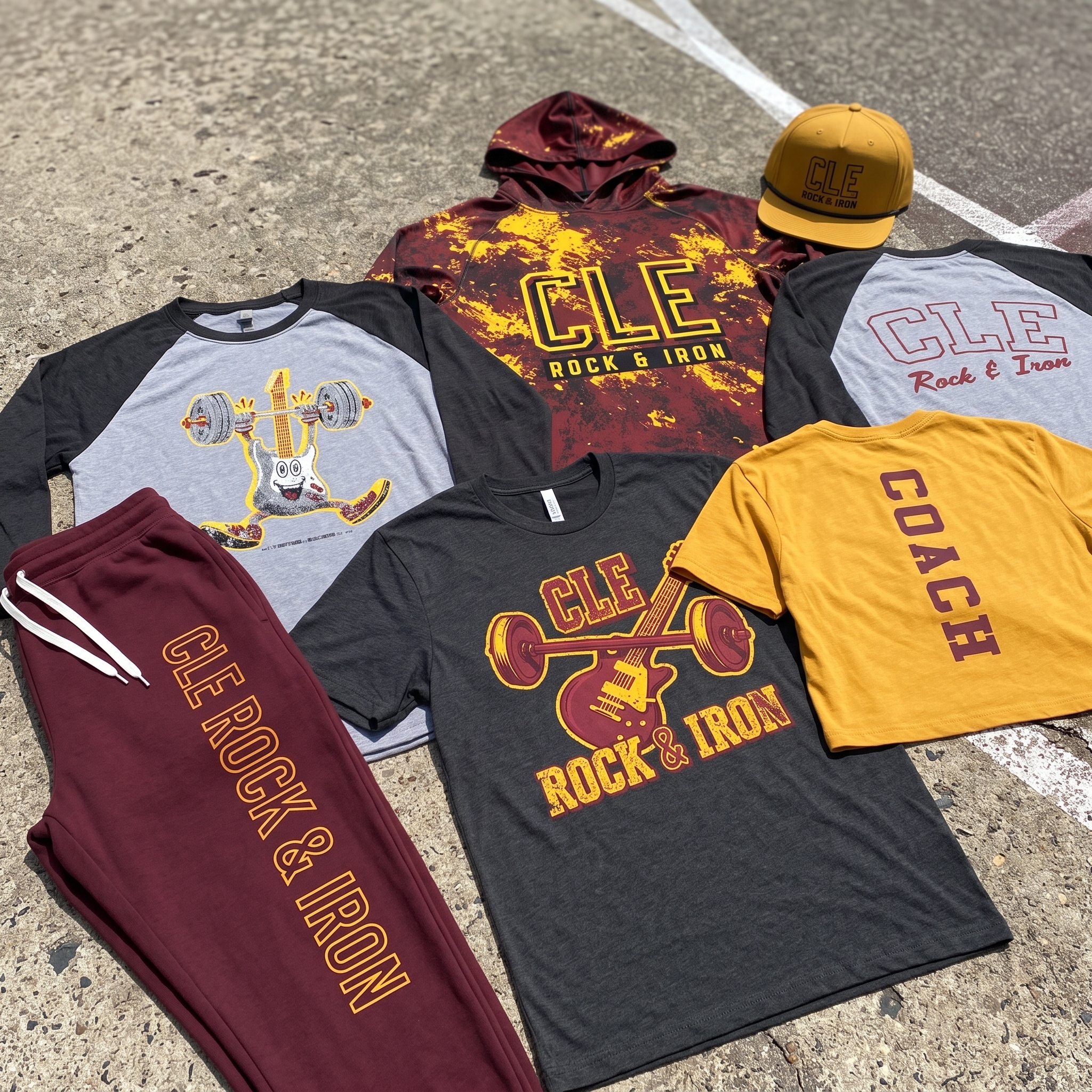
Culture + nostalgia
CLE Rock & Iron
A design system combining Cleveland's rock-and-roll identity with industrial references, retro artwork, and varied garment choices.
Explore the project →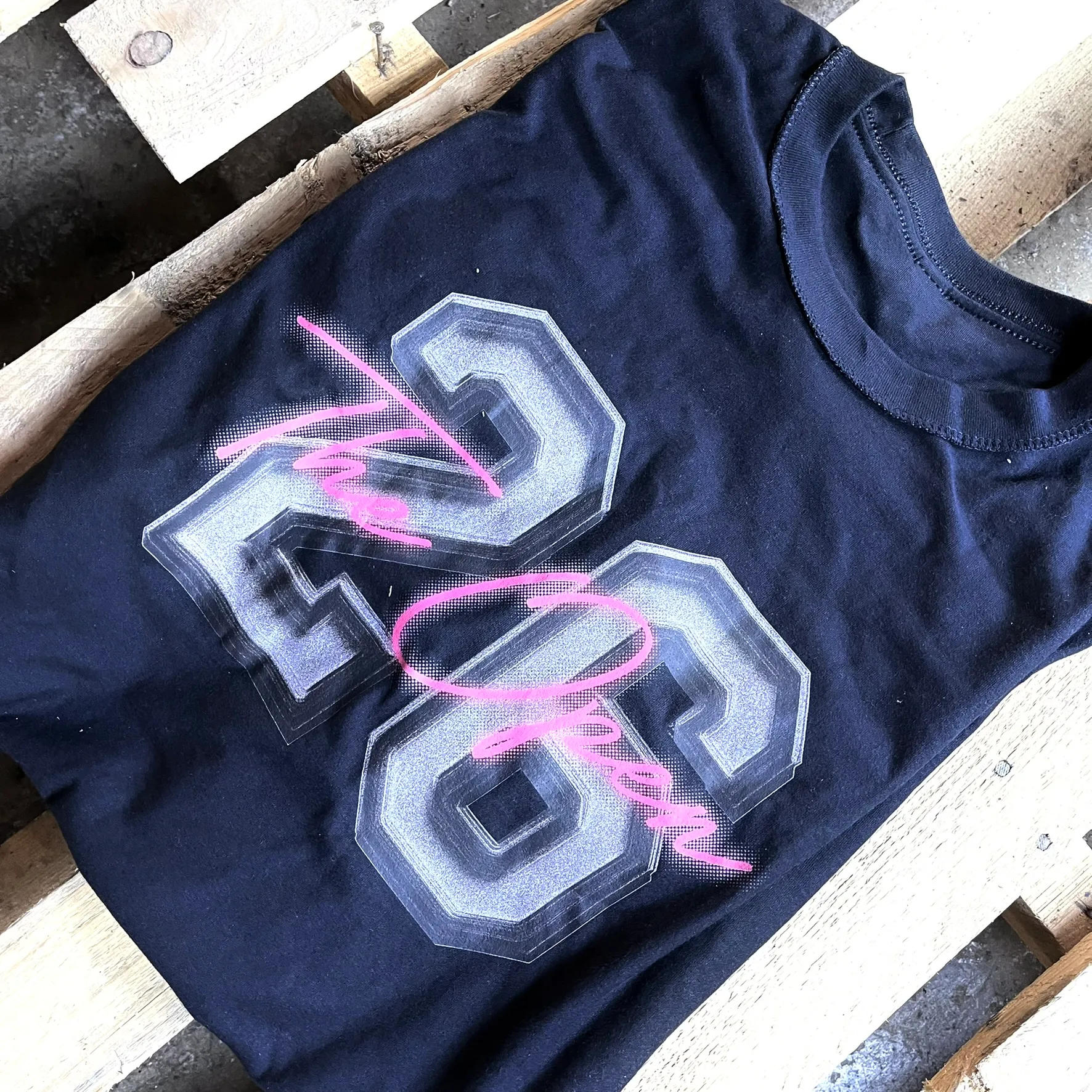
Breaking familiar patterns
The Open, Recut.
An exploration of what competition apparel can become when we stop relying on predictable annual event graphics.
Explore the project →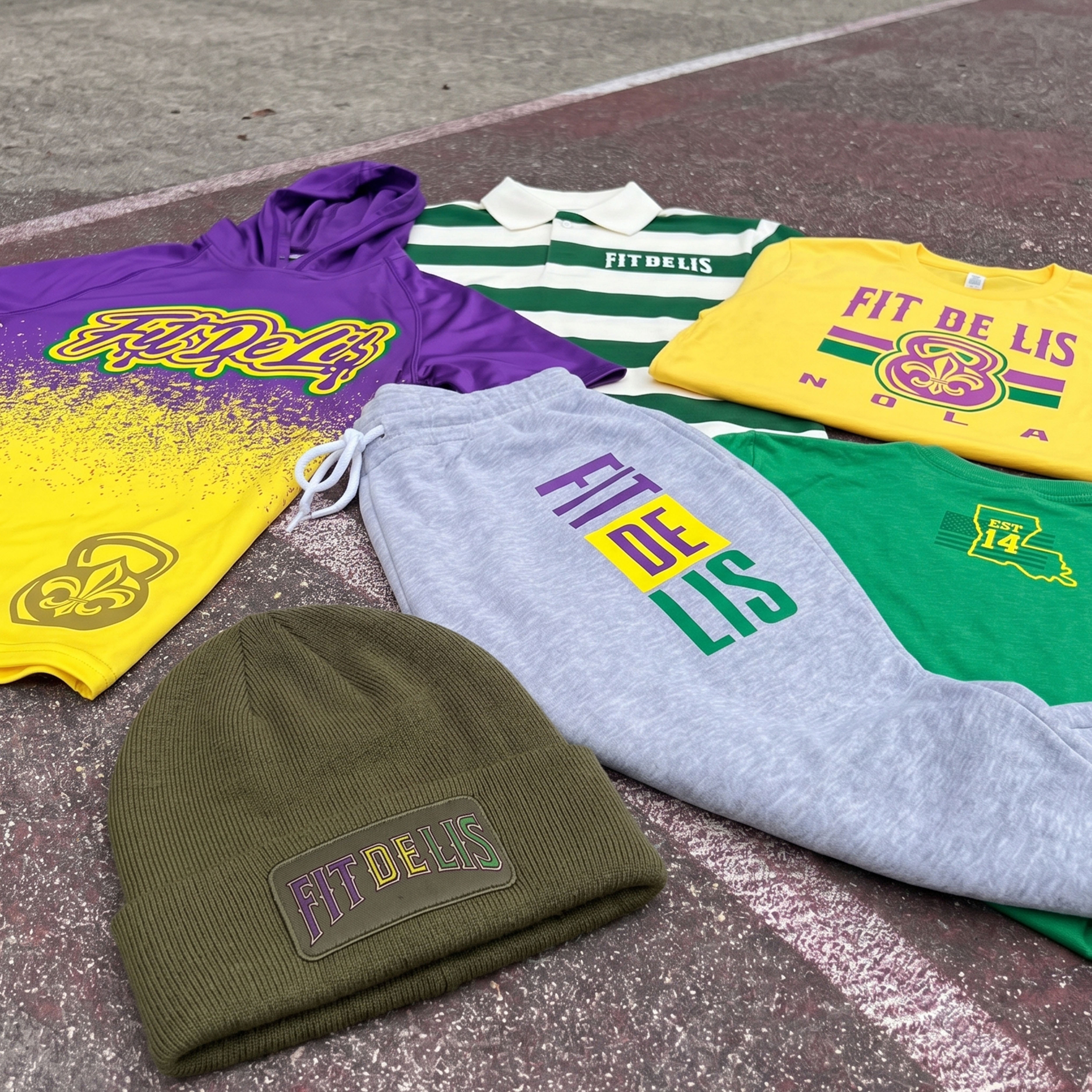
Regional identity
Elite Gym League
An ongoing exploration of how local culture and city personality can drive distinctive gym apparel concepts. Pictured: Fit De Lis.
Explore the project →08 / Where the real advantage comes from
Every Project Should Make the Next One Better
The biggest benefit of design volume isn't just finding a winning concept for this month's shirt order.
It's what we learn after years of making decisions, testing materials, talking to gym owners, and seeing which ideas turn into shirts people actually wear.
That accumulated experience should make the next project easier and more informed.
Some artwork styles work exceptionally well for certain communities and fall flat with others. Certain garment colors consistently outperform alternatives. Some printing techniques look great on a computer screen but don't feel right during a workout.
We've learned those lessons by doing the work. Sometimes we paid for the lesson ourselves.
Volume creates the opportunity to learn. Selection, honest feedback, and repetition turn that learning into better work.
That's the mathematical side of our creative philosophy. Not a promise that every design will be a hit, but an approach that should improve our decisions as we gather more experience.
09 / What we need from your gym
Good Design Still Requires a Partnership
We can create the options, but we don't know your members as well as you do. Your input makes the process more valuable.
- Tell us what has sold before. Previous designs, colors, quantities, and garment preferences provide useful starting information.
- Help us understand your community. A competitive CrossFit gym, a family-focused fitness center, and a boutique strength studio may need very different creative approaches.
- Be candid about the options. Explain what resonates and what doesn't, rather than simply asking for another version without direction.
- Choose a focused final product. More concepts in development doesn't mean offering members an overwhelming selection at checkout.
- Share what happened after launch. What sold? What got worn? What would you change? That feedback makes the next order smarter.
The point is to reduce the time everybody spends guessing, while raising the quality of the decisions that actually matter.
Questions About Our Design Process
Why does UNITEE provide multiple gym shirt design options?
Different creative directions give us something meaningful to compare. They help the gym and our team identify what fits the brand, the audience, and the garment before committing to production.
Does more design exploration mean more shirts or designs in my order?
No. We may explore many ideas internally, but generally recommend keeping the finished order focused on one or two strong designs. Development volume and production quantity are separate decisions.
Does UNITEE charge customers for all its Design Lab experiments?
No. UNITEE funds its independent Design Lab research and concept development. Standard apparel orders include artwork support; unusually extensive or separate design projects can be discussed individually before work begins.
Does producing more ideas guarantee a successful shirt?
No. Idea volume improves the opportunity to compare and learn, but success still depends on creative judgment, garment selection, price, audience, and promotion. Actual buying behavior is more useful than a room full of opinions.